
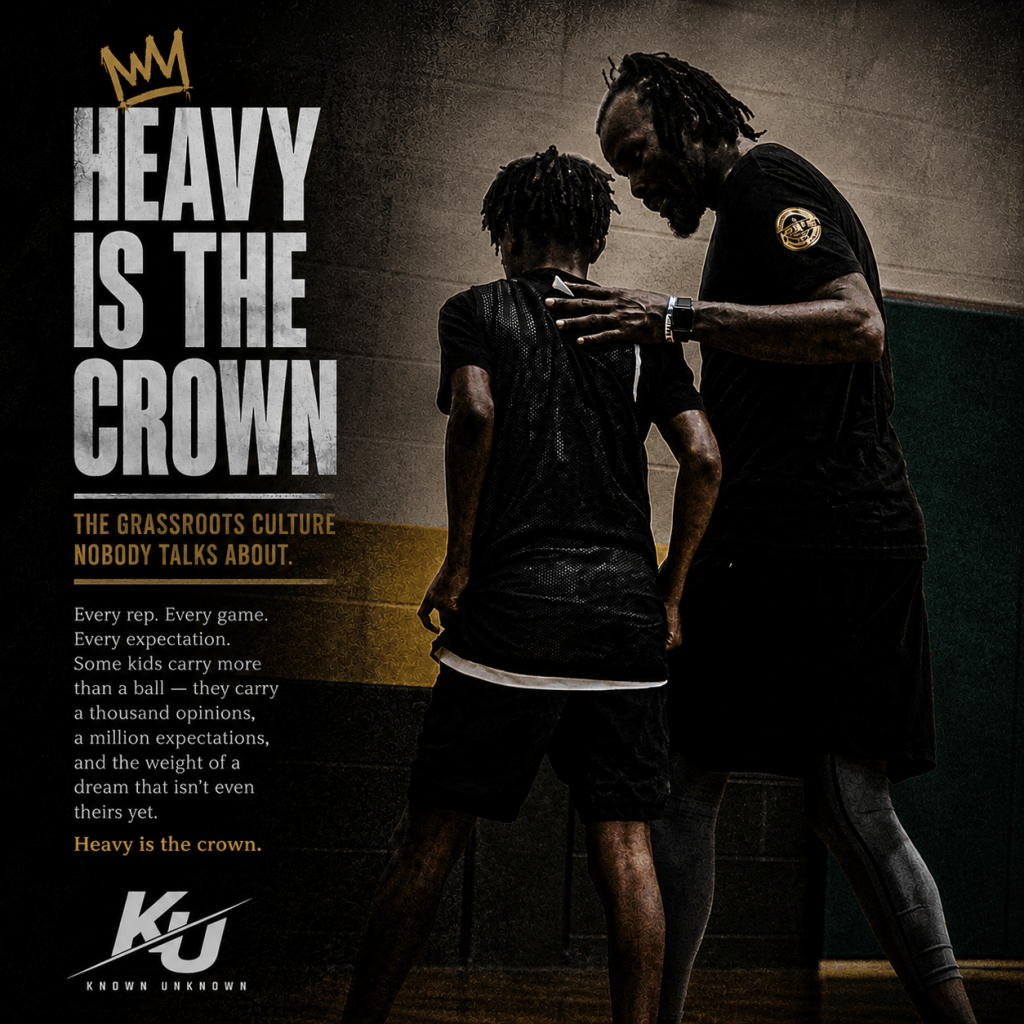
There’s a different type of exhaustion settling over grassroots basketball right now. Not the kind that comes from back-to-back tournament games or long weekends on the road. Not tired legs. Not sore knees. Not even physical burnout.
This is emotional fatigue.
You can see it in gyms across the country if you pay attention long enough. Young players walking into packed events carrying more than backpacks and basketballs. They’re carrying rankings, expectations, algorithms, mixtapes, social media opinions, and sometimes the unfinished dreams of the adults around them — all before they’ve even had the chance to fully enjoy the game itself.
Everybody sees the highlights.
Almost nobody sees the pressure.
That’s the part the culture keeps skipping over.
Somewhere along the way, youth basketball stopped feeling like development and started feeling like performance art. Attention became currency. Exposure became identity. Young hoopers stopped being treated like growing athletes and started being treated like investments.
One bad weekend now feels catastrophic.
A player struggles for two games and suddenly the energy changes. Group chats light up. Parents panic. Handlers get distant. Social media starts whispering. Evaluators move onto the next name like the previous months or years of work never existed.
That’s the reality many of these kids are navigating in silence.
And the coldest part of it all is that the culture has convinced them vulnerability looks weak. So they keep posting. Keep smiling. Keep reposting rankings and graphics like everything is fine. They perform confidence publicly while privately trying to hold themselves together emotionally.
Heavy is the crown.
Especially in an era where everybody wants the throne, but few people are honest about what it actually costs to wear it.
Modern basketball culture has quietly confused visibility with value. A player goes viral and suddenly the internet labels him “next.” But what happens when the views slow down? What happens when another player becomes the algorithm favorite? What happens when the cameras leave the gym?
That’s when you find out who really loves the game.
The mixtape era created a generation obsessed with moments instead of mastery. Everybody wants the clip. Fewer people want the process behind it. And that mentality has trickled into every level of grassroots basketball.
Kids force shots because cameras are rolling. Players hunt highlights instead of making winning reads. Parents chase platforms instead of patient development. Evaluators sometimes become hesitant to tell the truth because maintaining relationships has become part of the business model.
The ecosystem rewards appearance over substance.
And the players feel it.
You can see it in the way some young guards play now. Not free. Not creative. Not instinctive. Tight. Careful. Anxious. Playing not to fail instead of playing to express themselves. Scared to lose ranking position. Scared to lose followers. Scared to lose attention.
Pressure changes players.
Basketball is supposed to be rhythm. Freedom. Creativity. Expression. But when pressure takes over, players become robotic versions of themselves — overthinking every possession because the performance has become bigger than the game itself.
What’s happening mentally to these athletes deserves more conversation than it gets.
We’ve trained the crossover. We’ve trained shooting mechanics. We’ve trained branding and self-promotion. But very few people are teaching young athletes how to handle emotional weight. Nobody really teaches them how to survive failure publicly. Nobody teaches them how to separate their self-worth from performance.
And that matters.
Because every great player — no matter how talented — eventually experiences silence. The crowd gets quiet. The rankings shift. The attention fades temporarily. The people around them change.
The old era had pressure too, but it operated differently. Back then, reputation was earned gym by gym, city by city. Now perception can be manufactured overnight through clips, captions, and algorithms.
That changes everything.
Today, many young athletes feel pressure to maintain an image before they’ve built a foundation. And for the players everyone labels “the one,” the emotional weight becomes even heavier.
The ranked kid.
The viral kid.
The superstar prospect.
The son everyone expects to make it.
People love watching the rise. Few people truly acknowledge the emotional cost attached to carrying those expectations publicly at a young age.
That’s why the real ones stand out now.
The players who still compete with joy. The ones who don’t perform for cameras. The ones who stay grounded while everything around them turns basketball into politics, branding, and transactions.
Those are the players worth believing in long term.
Not because they’re perfect. But because they’re still connected to the soul of the game.
And that matters more than the culture realizes.
Grassroots basketball doesn’t need more fake kings. It needs protectors of the game. People willing to tell the truth. People willing to slow the machine down long enough to protect the humanity of the kids inside it.
Because maybe the answer isn’t teaching young athletes how to wear the crown.
Maybe the answer is teaching them they never needed validation from the crowd to know who they were in the first place
 Known UnKnown